Aligning Mission and Money: A Conversation with AJL Foundation
Are you or your organization considering bringing your finances into better alignment with your values or mission? Maybe you’ve got some misgivings, or you’re not sure where to start. Just Futures asked various organizations why and how they aligned their investments with their mission. We hope their answers can be a resource for you!
Here’s what AJL Foundation had to say about aligning their finances with their mission. To read what other organizations are saying, check out our case studies collection. Note: Some of the people and workplaces featured in this series are Just Futures clients. Others are not. In all cases, their answers reflect only their unique experience aligning their investments with their mission.
1. What does it mean to you to align your financial resources with your mission and values?
At AJL Foundation, we believe that all capital has impact—there is no neutral. Every investment either contributes to or undermines the future we are working to create.For us, aligning our financial resources with our mission means recognizing that our endowment is not separate from our charitable purpose. It is another tool for advancing it. We seek to steward the foundation's assets in ways that support long-term financial performance while also strengthening the communities, systems, and economy that Colorado's families and youth depend upon.
Over time, our thinking has evolved from simply avoiding harm through ESG integration to embracing a system-level investing approach. We now consider how our investments, shareholder rights, and relationships with investment managers and impacted community groups can contribute to healthier social, environmental, and economic systems that ultimately support both our mission and long-term portfolio resilience.
2. What changes did AJL Foundation make?
Our journey spans more than a decade. We began with the Board and staff acknowledging and taking responsibility for both the positive and negative impacts of every dollar the foundation had control over. From there, we moved to a new impact-oriented financial advisor, integrated ESG considerations into our investment process and gradually expanded our toolkit and expertise. Today, we take a total-portfolio approach that includes:- adopting a new Investment Policy Statement centered on system-level investing;
- transitioning our public equity portfolio from Vanguard to Ethic so we can actively steward the companies we own via proxy voting and shareholder engagement;
- engaging companies as long-term shareholders on issues that affect Colorado communities, workers, and the environment through place-based shareholder engagement;
- increasing transparency and measurement across the portfolio using multiple data sources rather than relying on a single ESG rating; and
- continuing to seek mission alignment across public markets, private investments, and grantmaking while maintaining our fiduciary responsibility.
The result is an investment program that treats every dollar, not just our grants, as part of our mission.
3. What challenges or concerns did you encounter?
The biggest challenge was determining how to meaningfully activate every dollar across our portfolio for positive social and environmental impact at the same time that the field is figuring it out, and very few peer foundations are transparent about their endowments. We had to have the right partners informing and guiding us, and did not have any sort of roadmap to follow at the beginning.We grappled with questions about fiduciary duty, financial performance, implementation, available investment options, impact measurement and reporting, and whether we would sacrifice diversification or returns. We also learned quickly that there is no universally accepted definition of "impact investing" or "mission-aligned investing," which meant we needed to develop our own philosophy and framework.
This is a journey rather than a destination and as the field continues to evolve, we continue learning alongside it.
4. What ultimately gave you confidence to move forward?
Recognizing that the traditional private foundation model—where only 5% of assets are directed toward solutions while up to 95% remain invested in ways that may perpetuate the very problems we seek to solve—gave us both the confidence and the urgency to move forward.Over time, the confidence to keep going came from education, research, experimentation, collaboration, and finding the right partners.
At this point, a decade later, our confidence comes from realizing that fiduciary duty and mission alignment are not competing objectives. They are very much aligned. Long-term investment success depends on healthy markets, resilient communities, and functioning social and environmental systems. As long-term investors, we believe helping strengthen those systems is part of prudent stewardship and is not separate from it.
5. How have the changes affected your organization, staff, members, or community?
The biggest change has been a shift in mindset. Our staff and Board now think about every asset as having the potential to create impact alongside financial return. That has led to more thoughtful governance, better impact and financial performance, and greater confidence that our investments reflect who we are as an organization.It has also expanded how we contribute to our community. In addition to grantmaking, we now engage companies as shareholders on issues affecting Colorado workers, public health, natural resources, and local communities. Our endowment has become another way to support long-term, systems-level change while continuing to pursue strong financial performance.
6. What advice would you give to another nonprofit or foundation considering similar changes?
Don't wait for the "perfect" solution before getting started. Mission alignment is not a single investment product or one-time decision, it's an ongoing process of asking better questions, strengthening governance, and making thoughtful improvements over time. Start now, no matter where your organization is at. This work could not be any more important.Find out what’s currently in your endowment and how it compares to peers from an impact lens. The Endowment Impact Benchmark is a great place to start. Then, start with your values and your purpose. Review your investment policy statement. Ask your advisors how they define fiduciary duty, stewardship, and long-term risk, and if the answers are not aligned with your answers, find the right partners. Be willing to learn from peers, and be patient. Meaningful progress will take time.
Most importantly, recognize that your assets are among the most powerful tools your organization has. When your investments, grantmaking, and mission begin working together, they stop causing harm and instead can reinforce one another in ways that create far greater impact than any one tool alone.
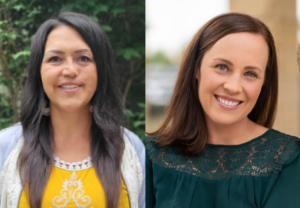
~Kristi Petrie & Alece Montez, Co-Executive Directors, AJL Foundation
To learn about how Just Futures might help you align your finances with your values, book an intro call with us!